
Table of Contents
What is SQL Injection (SQLi)
SQL Injection (SQLi) is a security attack where hackers insert harmful SQL code into input fields. If a website does not properly check user input, attackers can change database queries. This may allow them to access private data, bypass login systems, or delete important information from the database.
Types of SQL Injection
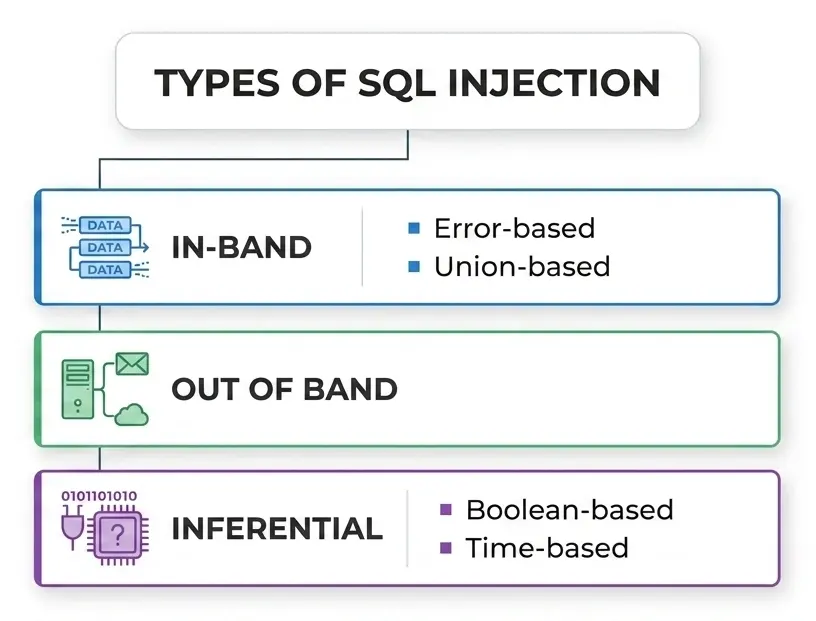
1. In-band SQLi (Classic):
The attacker uses the same communication channel to launch the attack and gather results.
-
Error-based SQLi:
SELECT * FROM users WHERE id = '' AND 1=CONVERT(int, (SELECT @@version))--'; -
Union-based SQLi:
SELECT id, username FROM users WHERE id = '' UNION SELECT username, password FROM users--';
2.Out-of-band SQLi:
Out-of-band SQL Injection happens when attackers cannot get results through the same request. Instead, the database sends data to an external server controlled by them.
3.Inferential SQLi (Blind):
Blind SQL Injection occurs when no direct data is shown. Attackers analyze application responses to guess database information without seeing actual results.
- Boolean-based SQLi: Boolean-based SQLi sends queries that return true or false. Different application responses help attackers understand database structure and extract hidden information.
- Time-based SQLi: Time-based SQLi delays database responses using queries. The time taken helps attackers determine whether a condition is true or false.
How does SQL Injection work:
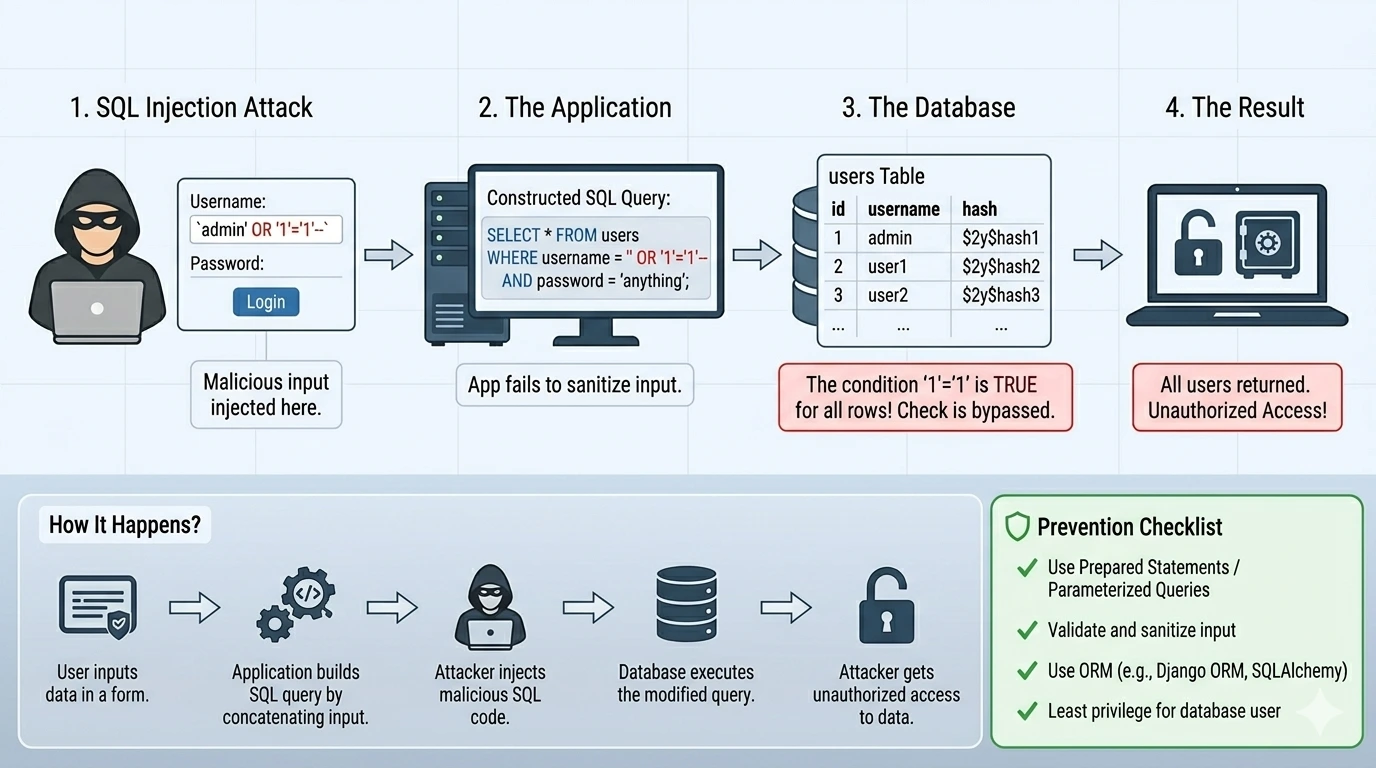
SQL Injection happens when a web application directly uses user input in a database query without proper validation. In a login form, the system checks username and password using an SQL query. If an attacker enters a condition that is always true, the query logic changes and allows login without correct credentials. This occurs because input is treated as part of the command, not just data. As a result, attackers can bypass security, access sensitive information, or even modify or delete database records.
How to Prevent SQLi:
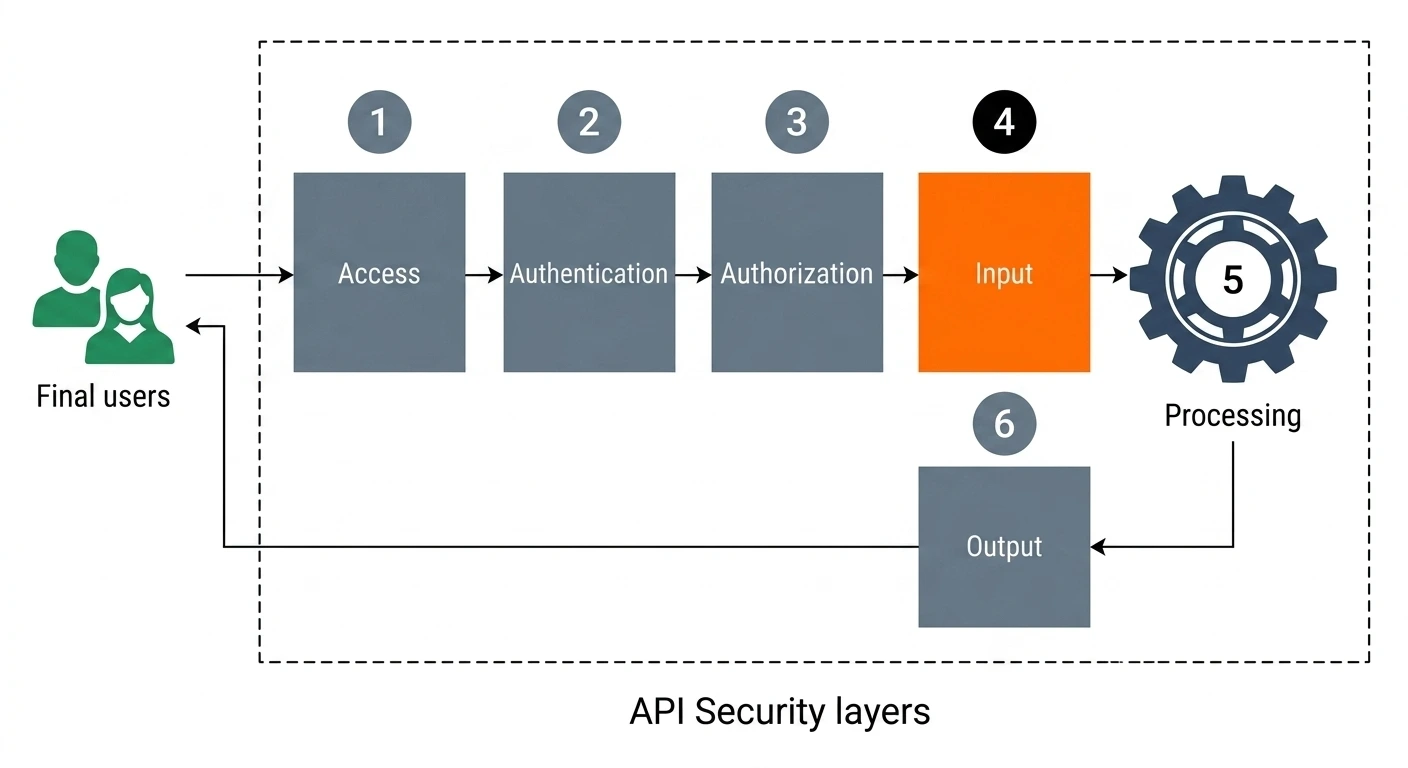
1. Access & Authentication:
Although authentication does not directly stop SQL injection, it helps reduce anonymous attacks. When users are required to log in, their activities can be tracked. This creates accountability and helps identify suspicious behavior.
2. Authorization:
Even if an attacker manages to exploit a vulnerability, proper authorization can limit the damage. Database users should only have access to necessary operations. For example, they should not have permission to delete tables or access sensitive admin data unless required.
3. Input Validation:
Validating user input is one of the most important defenses.
- Type Checking: Ensure that inputs match expected formats. For example, numeric fields should only accept numbers.
- Sanitization: Remove or block dangerous characters and SQL keywords.
- Schema Validation: Enforce strict input structures so that unexpected data is rejected immediately.
Use parameterized queries (prepared statements) and ORM tools like SQLAlchemy or Hibernate to separate user input from SQL logic and reduce direct query risks.
4. Processing:
The way queries are executed plays a major role in prevention.
- Prepared Statements: These separate SQL code from user data. The query structure is defined first, and user input is added later as plain data.
- Logic Separation: By keeping commands and data separate, the database never interprets user input as executable code.
5. Output:
Applications should avoid displaying detailed database errors to users. Instead of showing technical messages, a generic error message should be returned. This prevents attackers from gaining insights into the database structure.
What is SQL Injection Testing
SQL injection testing checks if an application accepts harmful input and runs it as a query, helping find security weaknesses before attackers exploit them.
SQL Injection Testing Methods
SQL injection testing checks inputs by adding special characters and keywords, analyzing responses, and using blind techniques to find and confirm database vulnerabilities.
Here are some common testing techniques:
1. Stacked Query Testing:
Testers try adding another SQL command after the original to see if multiple queries run. If it works, the system is unsafe. To prevent this, disable multi-query execution and use parameterized queries.
2. Error-Based Injection Testing:
This method forces database errors to gather hidden details from error messages. Systems should avoid showing such errors publicly and instead manage them securely on the backend.
3. Boolean-Based Injection Testing:
Testers insert conditions that return true or false and observe differences in responses. This helps detect flaws. Prevention includes using prepared statements and properly validating all inputs.
4. Out-of-Band (Blind) Exploit Testing:
When direct responses are not visible, testers use external servers to receive data indirectly. To prevent this, restrict database communication and turn off unnecessary external connection features.
5. Time Delay Exploit Testing:
This approach uses delayed database responses to check conditions. Longer response times reveal true conditions. Prevent it by validating inputs and avoiding dynamic query execution.
SQL Injection Testing: Manual vs Automated Testing
SQL injection testing helps identify security weaknesses in applications that interact with databases. In manual testing, testers enter different inputs into forms like login or search fields to observe how the system responds. This method is detailed but slow and may overlook some issues. Automated testing uses specialized tools to scan the application quickly, detect vulnerabilities, and generate clear reports. It saves time and improves accuracy. Organizations should perform testing regularly, especially after updates or code changes. Using both manual and automated approaches together ensures better coverage, strengthens application security, and helps protect sensitive data from potential cyberattacks.
Conclusion
SQL injection is a serious security risk that can expose or damage sensitive data if not properly handled. Understanding its types, working methods, and testing techniques helps developers identify vulnerabilities early. Applying strong prevention measures like input validation, prepared statements, and proper access control greatly reduces risk. Regular testing using both manual and automated methods ensures better protection. By following secure coding practices and continuous testing, organizations can build reliable applications, protect user data, and maintain trust in their systems.