React Vs Angular
-
Software February 2, 2026By Vanshita Mallick

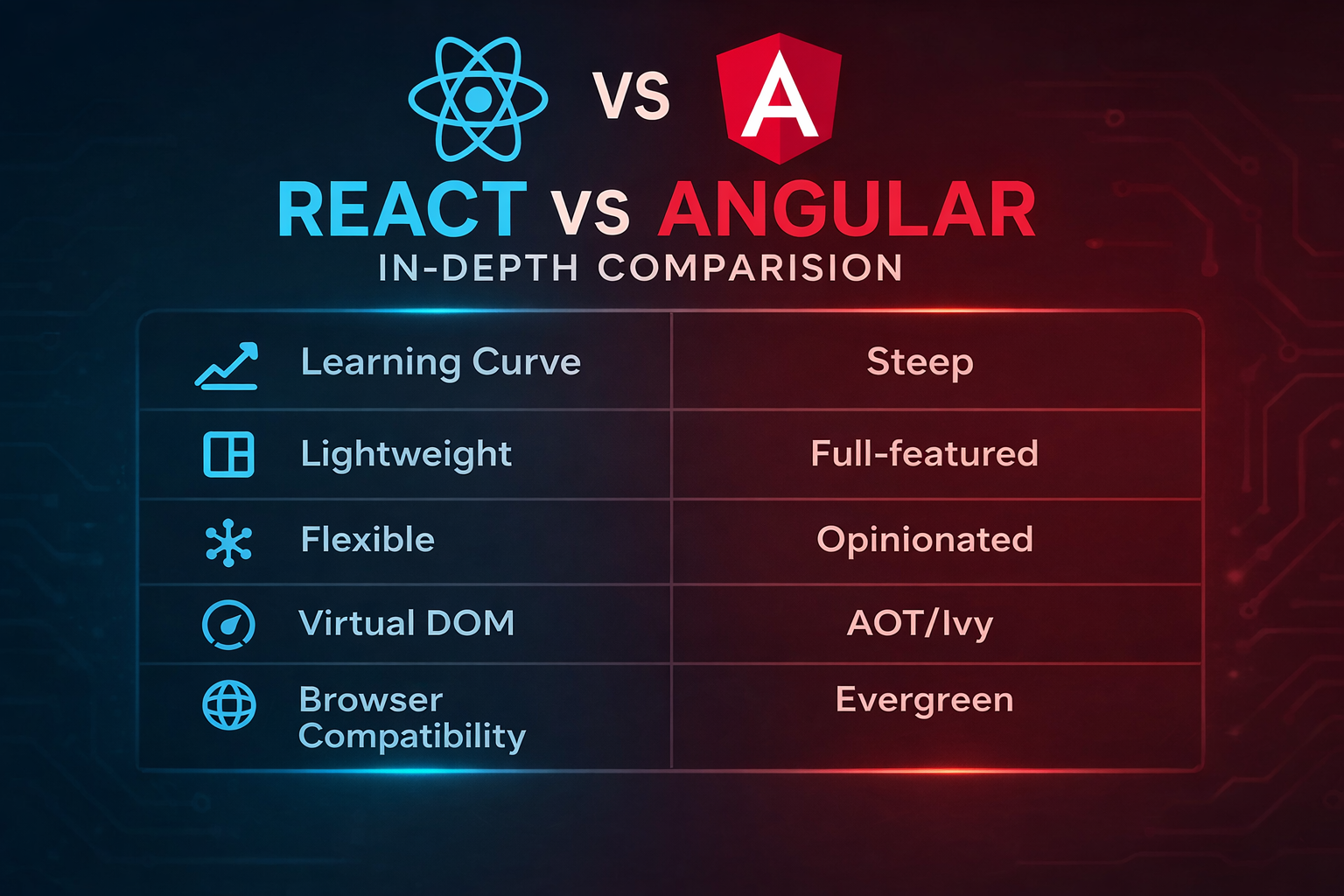
Choosing between Angular and React can be confusing because both are popular and powerful. Each one works differently and has its own way of building applications, its own learning curve, and its own tools. From my experience working with both, this blog will explain how Angular and React differ in structure, flexibility, tools, and how they are used — so you can easily understand what each one offers.
What is Angular?
Angular is a full front-end framework built and maintained by Google. It provides everything you need to create a complete web application out of the box. This includes routing, form handling, state management, HTTP communication, and testing tools. Angular uses TypeScript, which brings strong typing and clean structure to the code.
Key features of Angular:
- A complete and well-structured framework
- TypeScript-based development
- Built-in routing and form modules
- Powerful CLI for quick setup
What is React?
React is a JavaScript library developed by Meta (Facebook). Instead of being a complete framework, React focuses on one thing: building user interfaces. It is based on reusable components and lets developers choose additional tools and libraries that fit their project needs.
Key features of React:
-
- Component-based development
- Uses JSX (JavaScript + HTML)
- Virtual DOM for fast UI updates
- Very flexible ecosystem
Architecture Differences
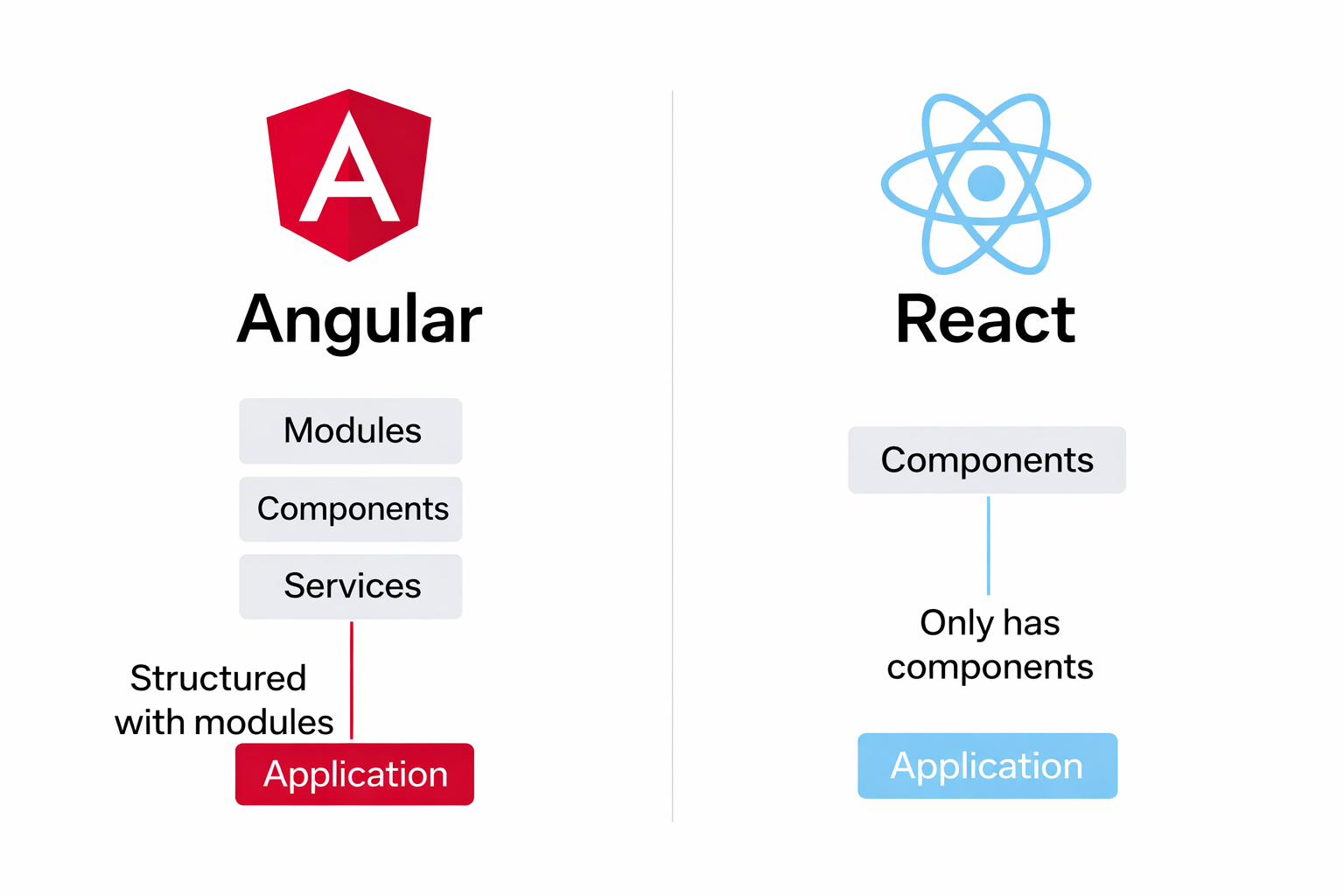
- Angular: Follows a very structured design. It uses modules, components, and services, which helps maintain clear organization—especially in large applications.
- React: On the other hand, does not enforce a specific architecture. Developers are free to structure their projects however they like. This flexibility is one of React’s biggest strengths.
Learning Curve
Learning Angular and React feels very different because both follow different styles.
Angular :- Angular takes more time to learn because:
- It uses TypeScript
- It has modules, components, services
- There are many built-in features
So, a beginner may feel Angular is heavy at the start but once you understand the basics, Angular becomes easier to work with because everything is already well-structured.
React:- React is easier in the beginning. You can make small components quickly and understand UI building very fast.
But React does not give everything built-in. You must learn extra things like:
- Routing
- State management
- API integration
So React starts easy, but you make more decisions as your project grows.
Performance Differences
Angular :- Angular checks the whole UI for changes, which works well but can feel heavy in very large apps. With optimizations like AOT, it still performs strongly for big enterprise projects.
React :- React uses a Virtual DOM to update only the parts of the UI that change. This makes it very fast and smooth, especially for apps with lots of dynamic content.
Ecosystem & Community Support
Angular
- Comes with most tools built-in.
- Backed by Google.
- Clear and structured documentation.
- Good for teams that want a standard way of working.
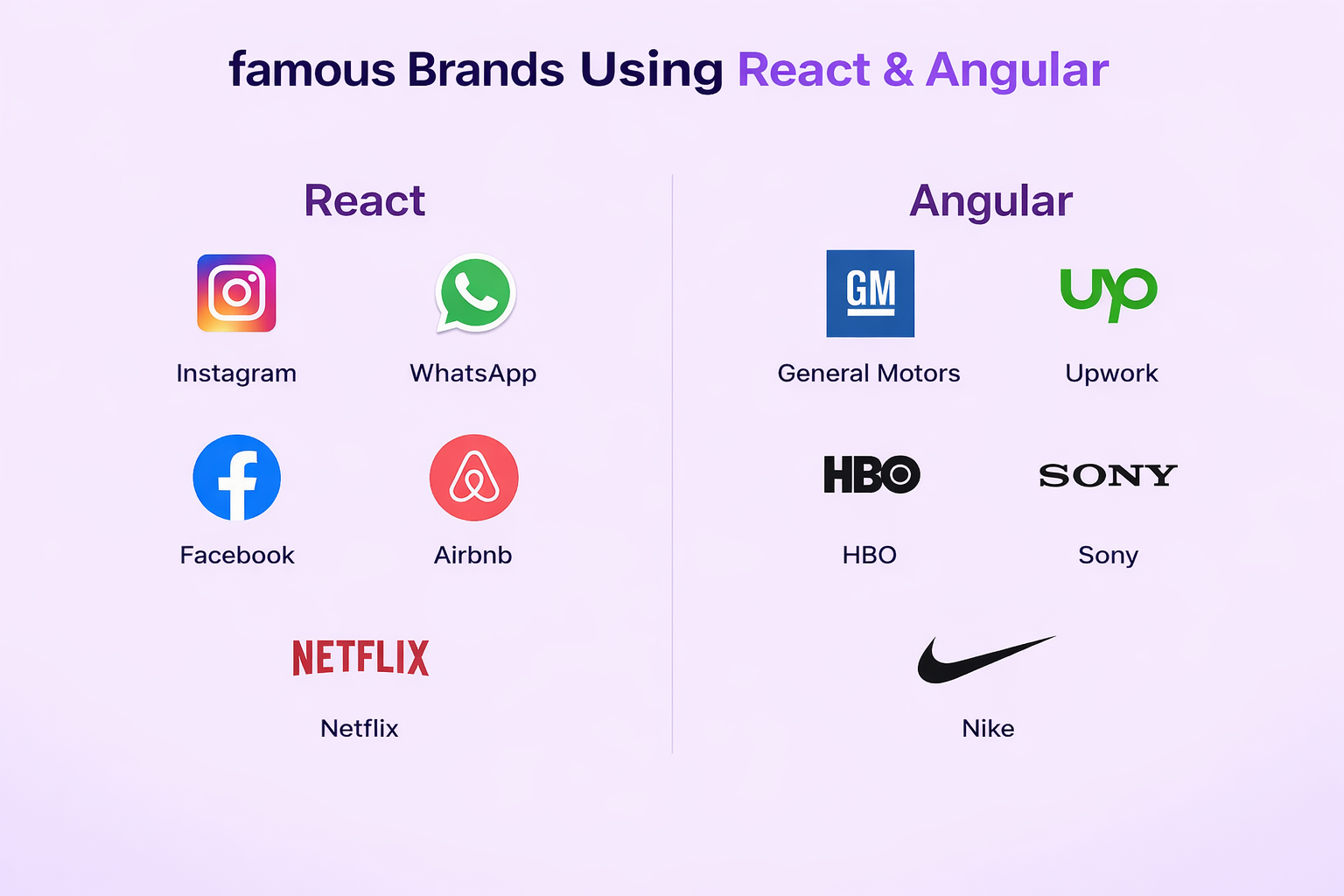
React
- Huge community and ecosystem.
- Many libraries and plugins available.
- Supported by Meta.
- Great for teams that like flexibility and choosing their own tools.
Conclusion
Angular and React are both strong and reliable tools for building web applications. Angular provides a complete structure, while React offers flexibility and speed. Neither one is better or worse — they simply solve problems in different ways. Choosing between them depends on your project size, your team, and how you prefer to work.